
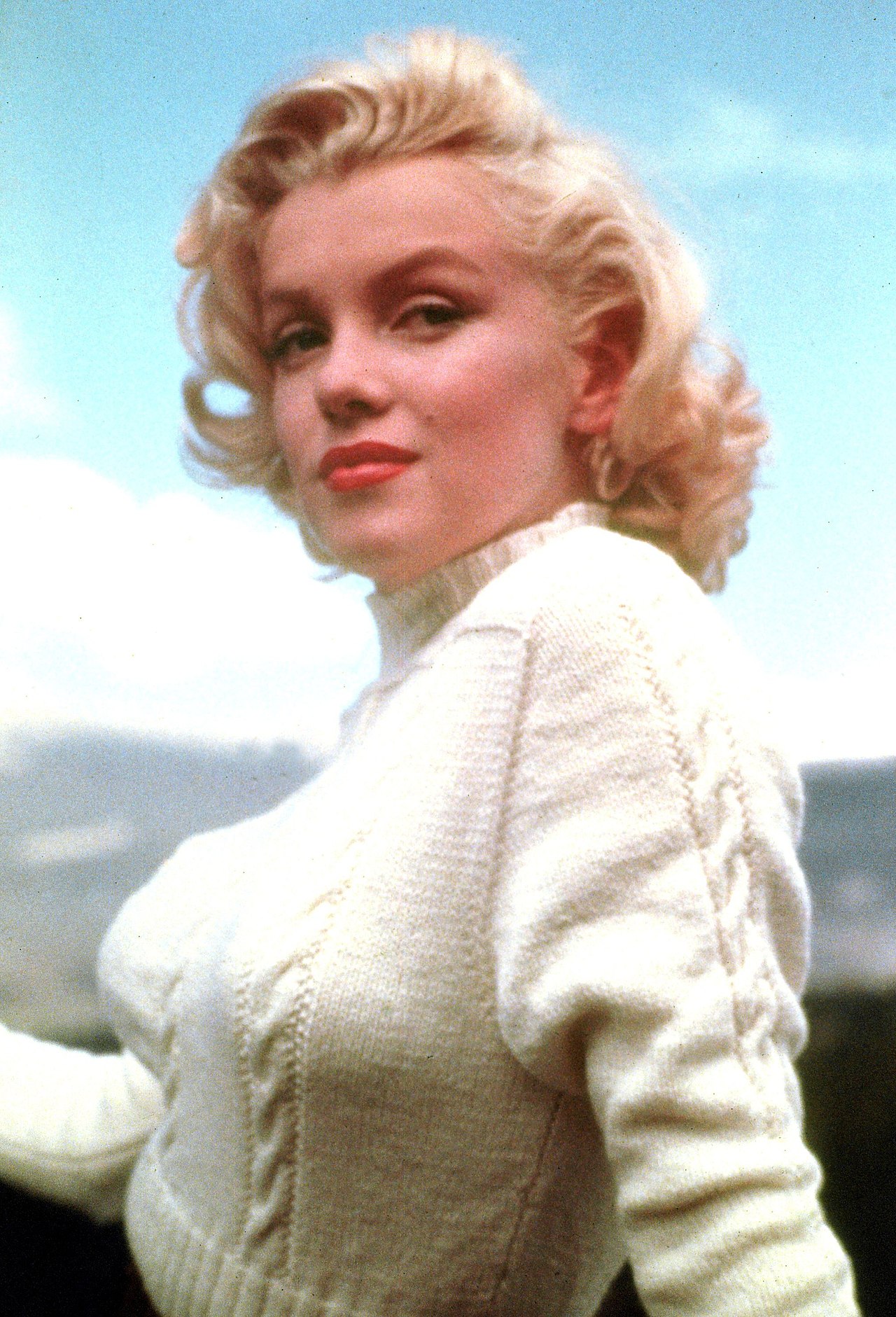
At 3:30 in the morning on August 5, 1962, housekeeper Eunice Murray noticed light seeping from beneath a bedroom door at 12305 Fifth Helena Drive. What she discovered behind that locked door would ignite one of Hollywood's most enduring mysteries and transform Marilyn Monroe from a troubled starlet into an eternal question mark.
The official story reads like a clinical tragedy: a 36-year-old actress, dependent on barbiturates and alcohol, succumbed to an overdose of Nembutal and chloral hydrate. The Los Angeles County Coroner's office ruled it a "probable suicide," closing the book on what Deputy Coroner Thomas Noguchi would later describe as a textbook case of intentional self-destruction. But the very precision of that official narrative—its neat edges and tidy conclusions—has proven to be its greatest weakness.
The Death Certificate's Cold Mathematics
The toxicological findings painted a stark picture. Monroe's blood contained 8 mg% of chloral hydrate and 4.5 mg% of pentobarbital, with an additional 13 mg% of pentobarbital concentrated in her liver. These were not the levels of accidental ingestion or gradual accumulation. As the coroner's report noted with bureaucratic certainty, the dosages were "several times over the lethal limit" and had been consumed "in one gulp or in a few gulps over a minute or so."
Empty medicine bottles sat sentinel beside her bed like evidence in a carefully staged scene. The completely empty Nembutal bottle was particularly significant—a prescription for 25 capsules that had been filled just one day before her death. The bedroom door was locked from the inside, an unusual behavior pattern that the investigators interpreted as further evidence of suicidal intent.
Yet it was precisely these clinical details that would later fuel decades of suspicion. How does someone consume forty-seven capsules of Nembutal without leaving a trace of the medication's characteristic yellow residue in the stomach? Why was Monroe's stomach completely empty when oral ingestion should have left evidence of the pills' passage?
The Curious Architecture of August 4th
The final day of Monroe's life unfolds like a play with too many characters entering and exiting at convenient moments. Photographer Lawrence Schiller arrived in the morning to discuss nude photographs from the abandoned film Something's Got to Give. Publicist Patricia Newcomb stayed overnight, engaging in what she described as an argument about Monroe's sleepless night.
At 4:30 p.m., psychiatrist Ralph Greenson arrived for a therapy session and asked Newcomb to leave. This request would later strike investigators as unusual—Greenson typically conducted sessions at his office, not Monroe's home. Before departing around 7:00 p.m., he instructed Murray to stay overnight, another deviation from normal routine.
The evening's phone calls create their own constellation of mystery. Monroe spoke with Joe DiMaggio Jr., who detected nothing alarming in her voice. She called Greenson to share news about DiMaggio's breakup with a girlfriend—a mundane conversation that hardly suggests imminent self-destruction. Then came the call that has haunted conspiracy theorists for decades: Peter Lawford, brother-in-law to President Kennedy, phoning to invite Monroe to a party.
According to Lawford, Monroe's voice was slurred, drugged. Her alleged final words have been parsed like scripture: "Say goodbye to Pat, say goodbye to the president, and say goodbye to yourself, because you're a nice guy." But Lawford's account, crucial to the suicide narrative, came filtered through a chain of telephone calls that included his agent Milton Ebbins and Monroe's lawyer Mickey Rudin—none of whom spoke directly to Monroe that night.
The Locked Room and Its Discontents
Murray's discovery of the body at 3:30 a.m. presents its own puzzles. She claimed to have awakened "sensing that something was wrong"—an almost supernatural intuition that led her to Monroe's bedroom. Finding the door locked and receiving no response, she called Greenson on his advice, looked through a window to see Monroe lying facedown, nude and clutching a telephone receiver.
The timeline here deserves scrutiny. Greenson arrived "shortly thereafter," broke a window to enter, and found Monroe dead. He then called physician Hyman Engelberg, who arrived at 3:50 a.m. to officially confirm death. The police weren't notified until 4:25 a.m.—nearly an hour after Murray's initial discovery.
What transpired during that missing hour? The official record is silent, but that silence has spoken volumes to those who question the established narrative. By the time police arrived, the scene had been thoroughly contaminated by multiple individuals who had legitimate reasons to be present but whose very legitimacy raises questions about what might have been altered, removed, or arranged.
The Coroner's Confidence and Its Critics
Chief Coroner Theodore Curphey's ruling of "probable suicide" rested on Monroe's documented history of depression, previous suicide attempts, and the physical evidence at the scene. The psychiatric consultants from the Los Angeles Suicide Prevention Center painted a portrait of a woman in terminal psychological distress: "Miss Monroe had often expressed wishes to give up, to withdraw, and even to die."
This professional consensus held until the 1970s, when alternative theories began circulating with increasing intensity. By 1982, the accumulation of questions had grown sufficiently troubling that Los Angeles County District Attorney John Van de Kamp ordered a "threshold investigation" to determine whether the case merited reopening.
The resulting thirty-page report, compiled by prosecutor Ronald Carroll and investigator Alan Tomich, found "no credible evidence" to support murder theories. However, their conclusion came with a crucial caveat: "factual discrepancies" and "unanswered questions" remained in the case. This official acknowledgment of uncertainty has provided endless fuel for conspiracy theorists who argue that the very existence of discrepancies proves the inadequacy of the original investigation.
The Needle That Wasn't There
Perhaps the most persistent challenge to the official narrative concerns the method of drug administration. Critics have long argued that the massive doses of barbiturates found in Monroe's system, combined with her completely empty stomach, suggests the drugs were administered rectally rather than orally—possibly through an enema containing the lethal cocktail.
This theory gained credibility from Monroe's known history of receiving chloral hydrate enemas from her physician, Hyman Engelberg, as treatment for her chronic insomnia. The absence of pill residue in her stomach, which should have been present given the enormous quantity allegedly consumed, has never been adequately explained by officials.
Deputy Coroner Noguchi later addressed these concerns in his 1983 memoir, arguing that hemorrhaging in Monroe's stomach lining indicated oral consumption and that her years of addiction would have accelerated the absorption rate, eliminating physical traces. Critics remained unconvinced, noting that Noguchi's explanations seemed designed to fit the predetermined conclusion rather than follow the evidence wherever it led.
The Kennedy Connection
The specter of the Kennedy brothers hovers over Monroe's death like a political shadow that refuses to dissipate. Her performance of "Happy Birthday, Mr. President" at Madison Square Garden on May 19, 1962—less than three months before her death—had generated intense speculation about an affair with John F. Kennedy. More substantive were rumors connecting her to Robert F. Kennedy, who allegedly visited her in the days immediately preceding her death.
These connections have spawned elaborate theories involving everything from CIA operatives to organized crime figures seeking to compromise or eliminate a woman who potentially possessed dangerous secrets about America's most powerful family. While no credible evidence has ever emerged to support these theories, their persistence speaks to the profound unease many feel about the official narrative's tidy resolution.
The Architecture of Doubt
What transformed Monroe's death from a Hollywood tragedy into an enduring mystery was not the presence of definitive evidence of foul play, but rather the accumulation of small inconsistencies, unexplained gaps, and curious coincidences that resist easy explanation. The locked bedroom door that was supposedly unusual became a crucial piece of evidence, yet no one could definitively say whether Monroe typically locked her door at night.
The telephone receiver clutched in her hand suggested she was trying to call for help, yet no record exists of any attempted outgoing calls after her conversation with Greenson. The delay in notifying police, while potentially innocent, created a window of time during which the scene could have been manipulated. Each element, viewed in isolation, might be explained away. Viewed collectively, they form a pattern of uncertainty that the official investigation never adequately addressed.
The Persistence of Questions
Sixty years after Monroe's death, the case remains a Rorschach test for American anxieties about power, celebrity, and truth. The official narrative—troubled starlet succumbs to depression and drug dependency—reflects one understanding of Monroe's life and death. The conspiracy theories—innocent victim silenced by powerful forces—reflect another.
Perhaps the most honest assessment comes from the 1982 district attorney's report, which found no evidence of murder while acknowledging that significant questions remained unanswered. This official uncertainty has proven more durable than any definitive conclusion might have been, ensuring that Marilyn Monroe's death certificate will continue to be read not as a final answer, but as the opening chapter of an endless investigation.
The death of Marilyn Monroe was officially ruled a probable suicide based on toxicological evidence and psychological evaluation. That this conclusion has failed to satisfy decades of scrutiny speaks not necessarily to its falsity, but to the inherent impossibility of reducing a human life—and death—to the clean mathematics of a coroner's report. In the end, Monroe's greatest performance may have been her exit, leaving behind a mystery as enduring and inscrutable as the smile of the Mona Lisa.
Discussion (0)
Log in or register to join the discussion.
No comments yet. Be the first.