
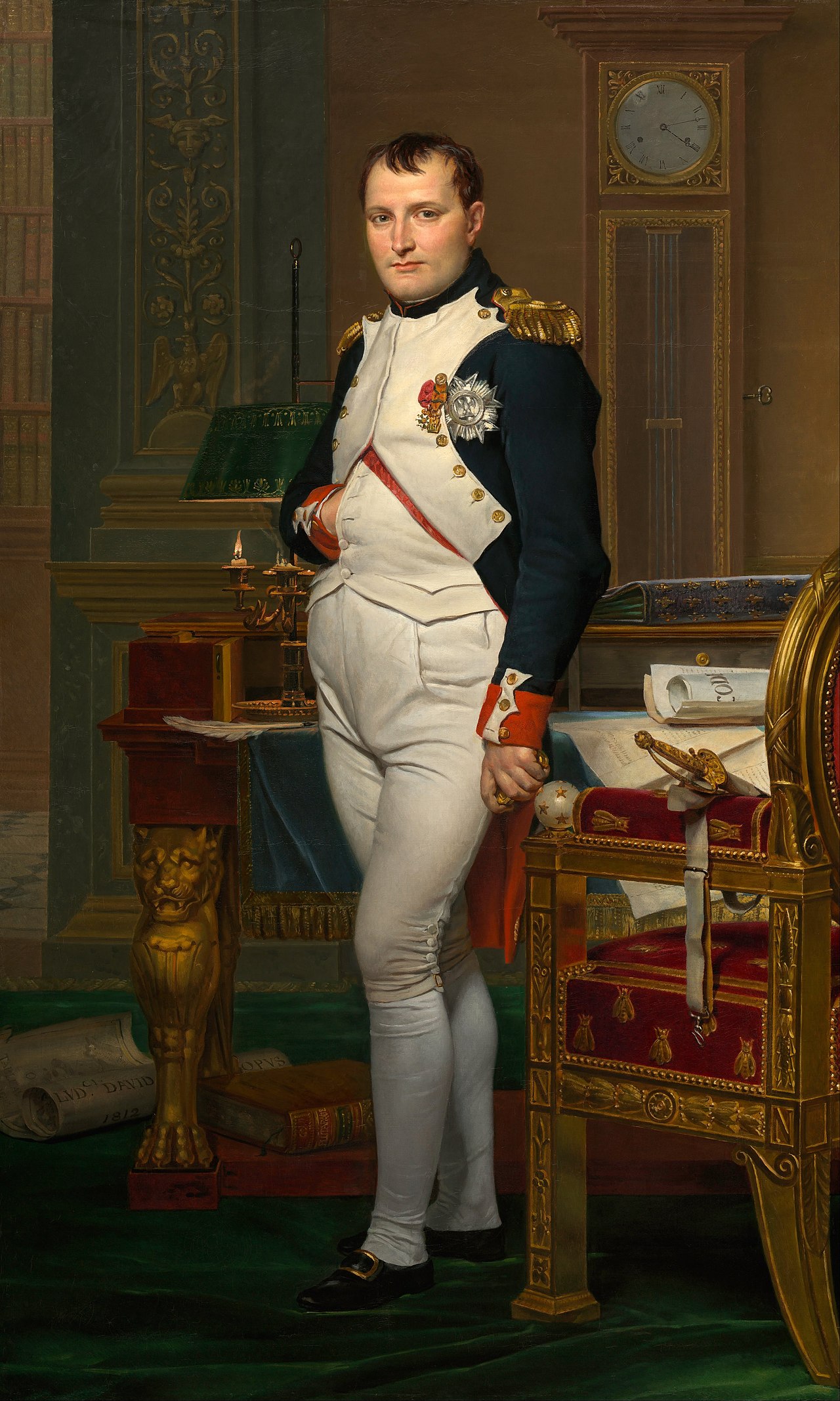
On the windswept island of St. Helena, five thousand miles from the battlefields where he had commanded armies and reshaped the map of Europe, Napoleon Bonaparte was dying by degrees. The man who had crowned himself Emperor of the French, who had marched to Moscow and made kings of his brothers, spent his final years in a damp house called Longwood, his body slowly betraying him in ways that would puzzle physicians for centuries to come.
The death that came to Napoleon on May 5, 1821, was not the swift sword-thrust of a Marengo or Austerlitz. It was a long, agonizing fade—a withering that began almost from the moment he set foot on British soil as their most illustrious prisoner. What killed the Emperor has remained one of history's most enduring medical mysteries, but mounting evidence points to a silent assassin that may have been lurking in the very walls of his prison: arsenic.
The Symptoms of Decline
From the moment of his arrival at St. Helena in October 1815, Napoleon's health began a steady deterioration that alarmed even his captors. The robust general who had once spent eighteen hours in the saddle now complained of constant fatigue. His once-piercing grey eyes grew dull and yellowed. His hair, which had remained thick through campaigns across Europe, began falling out in alarming quantities.
Dr. Francesco Antommarchi, the Corsican physician who attended Napoleon in his final years, documented symptoms that would later intrigue toxicologists: severe abdominal pain, nausea, weakness in the extremities, and a peculiar metallic taste in the mouth. The Emperor's skin took on a sallow, almost greenish pallor. His hands shook. He complained constantly of being cold, even in the subtropical climate of the South Atlantic.
"I feel an inward fire consuming me," Napoleon told his valet, Louis Marchand, in one of his final conversations. "My strength abandons me. I am dying by inches."
The official autopsy, conducted by British military surgeons, attributed Napoleon's death to stomach cancer—a diagnosis that seemed to settle the matter. But even at the time, there were whispers. The French members of Napoleon's household noted inconsistencies. The Emperor's symptoms did not entirely match those typically associated with gastric carcinoma. More troubling still, several members of his entourage began experiencing similar, if milder, ailments.
The Wallpaper Theory
In 1961, Swedish dentist Sten Forshufvud published research that would revolutionize understanding of Napoleon's death. Forshufvud had obtained samples of the Emperor's hair—locks carefully preserved by his devoted followers—and subjected them to neutron activation analysis. The results were startling: the hair contained arsenic levels forty times higher than normal.
This discovery launched decades of investigation and fierce scholarly debate. One theory that gained considerable traction was that Napoleon had been slowly poisoned by his own living quarters. Longwood House, hastily prepared for the imperial prisoner, had been wallpapered with a fashionable green pattern. In the early 19th century, such green wallpapers were commonly colored with Scheele's Green—a pigment containing copper arsenite.
The damp climate of St. Helena, combined with poor ventilation in Napoleon's rooms, could have created conditions for Scopulariopsis brevicaulis, a fungus that converts arsenic compounds into a volatile, colorless gas called trimethylarsine. Day after day, year after year, the Emperor would have been breathing this poison in microscopic doses—enough to cause chronic toxicity but not immediate death.
Dr. David Jones, a chemistry professor who studied the Longwood wallpaper samples, found arsenic concentrations as high as 0.12 grams per square meter. "Napoleon was essentially living in a gas chamber," Jones concluded. "The conditions were perfect for chronic arsenic poisoning."
The Murder Theory
Yet the wallpaper theory, compelling as it seems, does not satisfy all investigators. Some historians have posited a more sinister explanation: deliberate poisoning by someone in Napoleon's inner circle.
Count Charles de Montholon, one of Napoleon's companions in exile, has attracted particular suspicion. Montholon had access to the Emperor's food and drink, and stood to benefit financially from Napoleon's death. Moreover, hair samples from Napoleon's final months show arsenic levels that spike dramatically—patterns more consistent with deliberate administration than environmental exposure.
French toxicologist Dr. Pascal Kintz, who reanalyzed Napoleon's hair in 2008, found evidence of multiple arsenic exposures throughout the exile period. "The pattern we see is not consistent with gradual environmental poisoning," Kintz observed. "There were several acute episodes, suggesting deliberate administration of larger doses."
The murder theory gains credence from the political context of Napoleon's exile. The restored Bourbon monarchy in France, the Coalition powers who had defeated him, even elements within his own entourage—all had motives for ensuring the Emperor never returned from St. Helena. A slow poisoning would appear natural and avoid the martyrdom that would have followed an obvious assassination.
The Self-Medication Theory
A third possibility, perhaps the most tragic, is that Napoleon inadvertently poisoned himself. Throughout his life, the Emperor had been a devoted practitioner of self-medication, consuming various remedies for his chronic ailments. Many medications of the era contained significant amounts of arsenic, which was considered beneficial for a variety of conditions.
Napoleon's personal medicine chest, preserved at the Musée de l'Armée in Paris, contained several preparations that modern analysis has shown to be rich in arsenic compounds. Fowler's Solution, a popular tonic of the time, contained potassium arsenite. Dr. James' Powders, another favored remedy, were laden with antimony and traces of arsenic.
Given Napoleon's tendency to self-medicate and his increasing desperation about his declining health, it is entirely possible that he inadvertently administered fatal doses of arsenic to himself while seeking relief from his symptoms.
The Scientific Debate Continues
Despite decades of investigation and increasingly sophisticated analytical techniques, the question of what killed Napoleon remains contentious. Critics of the arsenic theories point to several problems with the evidence.
Hair samples from the 19th century may have been contaminated during preservation. Arsenic was commonly used in cosmetics and hair treatments of the period, potentially skewing results. Moreover, the symptoms described by contemporary witnesses, while consistent with arsenic poisoning, could equally well indicate other conditions common to the era—hepatitis, peptic ulcers, or indeed stomach cancer as the original autopsy concluded.
Dr. Robert Genta, a pathologist who reviewed the historical evidence in 2007, argued that the medical records were more consistent with gastric adenocarcinoma than with arsenic poisoning. "Napoleon died of the same disease that killed his father," Genta concluded. "The arsenic levels in his hair, while elevated, are not necessarily fatal and could be explained by the medical treatments and environmental conditions of the time."
The Emperor's Long Shadow
What makes Napoleon's death so compelling is not merely the medical mystery, but what it represents about the nature of power and mortality. Here was a man who had bestridden Europe like a colossus, who had proclaimed himself the equal of Caesar and Alexander, brought low by something as mundane as wallpaper paste or as banal as stomach acid.
The arsenic theory transforms Napoleon's exile from a simple imprisonment into a kind of horror story—the great Emperor slowly consumed by the very walls meant to contain him. It speaks to deeper truths about the Industrial Age then dawning, when new technologies and materials brought unforeseen dangers. The green wallpaper that may have killed Napoleon was a product of the same chemical innovations that were transforming European society.
Whether Napoleon died from arsenic poisoning, stomach cancer, or some combination of factors may never be definitively resolved. The historical record is incomplete, the physical evidence contaminated by time, and the political stakes—even two centuries later—remain high. What is certain is that the Emperor's death was neither quick nor painless, but rather a long diminishment that stripped away everything that had made him Napoleon Bonaparte until only the mortal flesh remained.
In the end, perhaps the manner of Napoleon's death matters less than what it represented: the final defeat of a man who had reshaped the world through will and ambition, brought low not by the sword but by the inexorable processes of chemistry and time. Whether that chemistry was accidental or deliberate, environmental or medicinal, remains one of history's most haunting questions—a final mystery from the man who had claimed to hold all the answers.
Discussion (0)
Log in or register to join the discussion.
No comments yet. Be the first.