
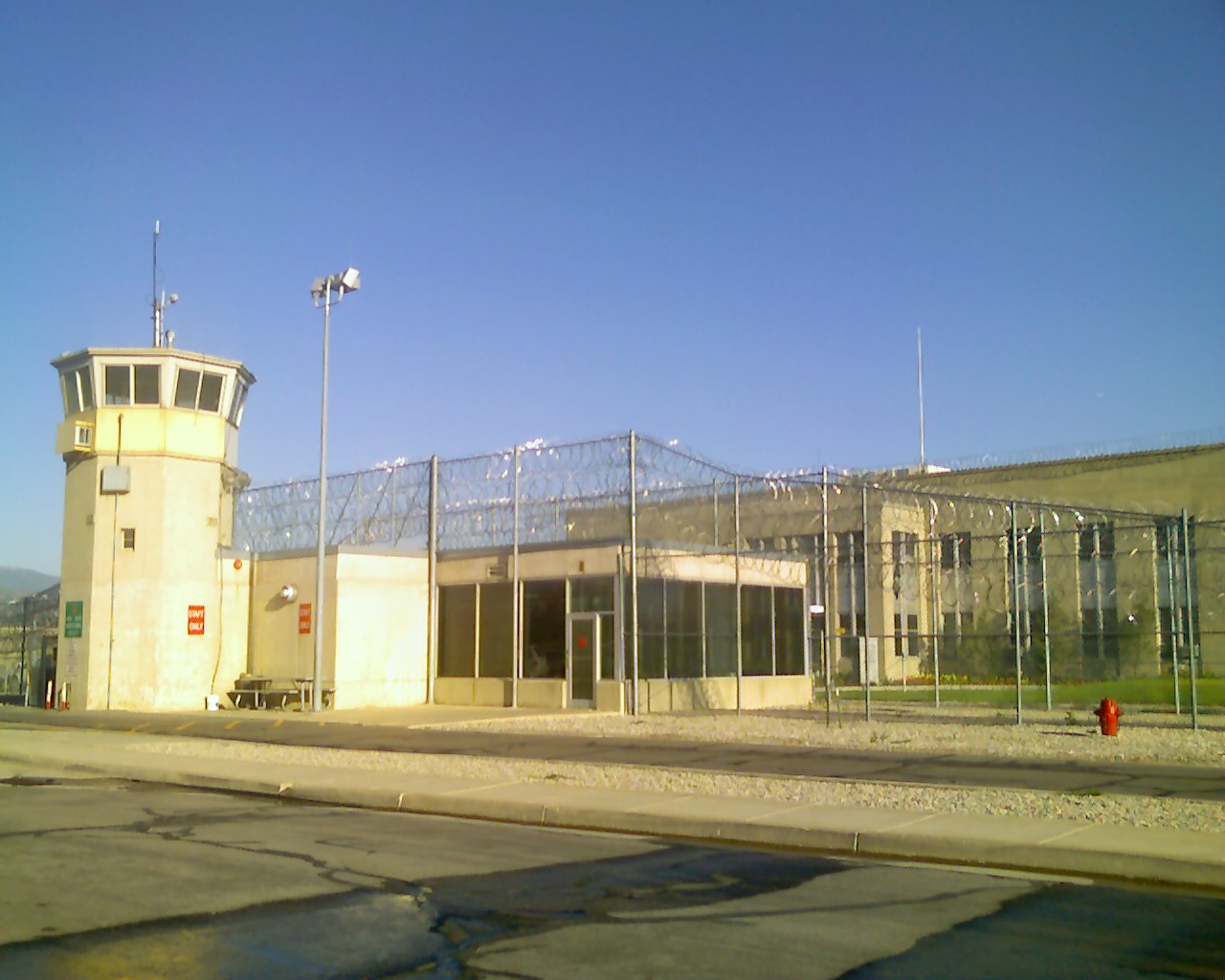
On a frigid January morning in 1977, strapped to a chair behind the Utah State Prison's abandoned cannery, Gary Gilmore became the first person executed in America in nearly a decade. When asked for his last words, he didn't offer remorse for the two young men he'd murdered in cold blood. He didn't invoke God or country or family. Instead, he delivered two words that would echo through American criminal justice history with their chilling nonchalance: "Let's do it."
Those words—so casual they could have been uttered before ordering lunch—marked the end of America's unofficial moratorium on capital punishment and launched the modern era of executions. But their power lies not in their gravity, but in their terrible lightness.
The Man Who Demanded Death
Gary Mark Gilmore was 36 when he spoke those final words, a career criminal whose life had been a relentless spiral of violence, incarceration, and rage. Born Faye Robert Coffman in McCamey, Texas, he'd discovered his birth name only decades later—a revelation that convinced him he was illegitimate and fueled his lifelong fury at his father. The name change became a festering wound in a childhood already scarred by brutal beatings and psychological torment.
By July 1976, freshly paroled after spending most of his adult life in various prisons, Gilmore was living in Provo, Utah, with a distant cousin who'd tried to help him start over. Despite his IQ of 133 and artistic talents, he couldn't—or wouldn't—escape the gravitational pull of his own destructiveness. Within months, he was stealing, drinking, and fighting again, caught in an intense, toxic relationship with 19-year-old Nicole Barrett Baker.
On two consecutive summer nights that July, Gilmore's life reached its inevitable crescendo of violence. First, he robbed and murdered Max Jensen, a gas station attendant in Orem. The next evening, he killed Bennie Bushnell, a motel clerk in Provo. Both victims complied with his demands. Both were shot in the head anyway. Both were young Brigham Young University students with wives and infant children.
The murders were as senseless as they were brutal—executions carried out not from desperation or panic, but from something colder and more disturbing. Gilmore accidentally shot himself during the second crime, leaving a trail of blood that led police directly to him. He was captured without resistance, as if he'd been waiting for this moment all his life.
The Trial of a Man Who Wanted to Die
Gilmore's trial was brief—just two days. The evidence was overwhelming, the outcome never in doubt. But what made the case extraordinary wasn't the verdict; it was what happened next. When the jury recommended death, Gilmore didn't just accept it—he embraced it.
This was unprecedented in the modern American legal system. Capital defendants fought death sentences; they didn't demand them. But Gilmore actively sought his execution, firing his attorneys and refusing appeals. "This is my life and this is my death," he declared at a pardons hearing. "It's been sanctioned by the courts that I die and I accept that."
His death wish created a bizarre legal situation. Anti-death penalty advocates, including the ACLU, fought harder to save Gilmore's life than he did. His own mother sued for stays of execution. The Supreme Court was forced to rule on whether a condemned man could waive his right to continued legal challenges. In a 5-4 decision, they said he could.
Gilmore's insistence on death wasn't born from remorse or honor—it was the final act of a man who'd spent his life at war with existence itself. He attempted suicide twice while on death row, as if execution couldn't come quickly enough.
The Theater of Death
Utah offered condemned prisoners a choice: hanging or firing squad. Believing a hanging could be "botched," Gilmore chose the rifles. "I'd prefer to be shot," he said with characteristic matter-of-factness.
On the morning of January 17, 1977, Gilmore was transported to the prison's makeshift death house—an abandoned cannery behind the main facility. The setting was almost comically improvised, as if America had forgotten how to kill its condemned and had to improvise the machinery of death.
Five volunteer police officers stood concealed behind a curtain, their .30-30 rifles loaded with Winchester SilverTip ammunition. Prison officials claimed four carried live rounds and one a blank, though Gilmore's brother Mikal would later count five bullet holes in the execution shirt. "The state of Utah, apparently, had taken no chances," he wrote.
Strapped to his chair with sandbags positioned behind him to catch the bullets, Gilmore was asked for his final words. His response—"Let's do it"—was delivered with the same casual tone he might have used to suggest getting coffee. There was no drama, no plea for forgiveness, no final revelation. Just an instruction to proceed with his own destruction.
The Afterward of Those Words
The Catholic prison chaplain, Thomas Meersman, administered last rites after Gilmore's public statement. As the black hood was placed over his head, Gilmore offered what were actually his final words—"Dominus vobiscum" ("The Lord be with you" in Latin). Meersman replied, "Et cum spiritu tuo" ("And with your spirit"). It was a moment of traditional religious ritual, a stark contrast to the casual brutality of his public farewell.
The execution was swift. At 8:07 AM, five rifles fired almost simultaneously. Gilmore was pronounced dead minutes later. Within hours, his corneas had been transplanted to two recipients—perhaps his only positive contribution to the world.
"Let's do it" became a catchphrase, eventually appropriated by Nike for their "Just Do It" slogan, though the company has always denied any connection. The phrase embedded itself in American culture as a symbol of grim determination—or perhaps as a reminder of how casually we can approach our own annihilation.
The Resonance of Casual Evil
What makes Gilmore's final words so unsettling isn't their content but their tone. They weren't the desperate cry of a broken man or the defiant snarl of an unrepentant killer. They were the words of someone treating his own execution like a minor inconvenience to be gotten through.
This casualness reflects something deeper about Gilmore's character and perhaps about the nature of evil itself. His crimes weren't crimes of passion or desperation—they were acts of a man who had moved beyond caring about human life, including his own. His final words weren't an exit line; they were a demonstration that even death was just another transaction to him.
Norman Mailer's Pulitzer Prize-winning account, "The Executioner's Song," immortalized Gilmore's story and his casual approach to both murder and death. The book captured the banality that can lurk at the heart of ultimate violence—the way the most profound acts can be accompanied by the most mundane words.
Gilmore's execution marked the end of America's informal moratorium on capital punishment. In the years since, over 1,500 people have been executed in the United States. Each has been asked for final words, creating a ritual that attempts to invest the moment with solemnity. Some have offered poetry, others have proclaimed innocence, many have sought forgiveness.
But none have matched the terrible simplicity of Gilmore's "Let's do it"—words that suggested death was just another item to check off a to-do list. In their very ordinariness, they revealed something extraordinary: a man so disconnected from life that he could face his own end with the enthusiasm of someone starting a pleasant task.
Those two words didn't just end a life; they ended an era and began another. They marked America's return to institutionalized execution, delivered with all the ceremony of ordering a sandwich. Perhaps that's what makes them so haunting—not their finality, but their casualness. In the face of the ultimate act, Gary Gilmore offered the ultimate understatement.
Discussion (0)
Log in or register to join the discussion.
No comments yet. Be the first.