
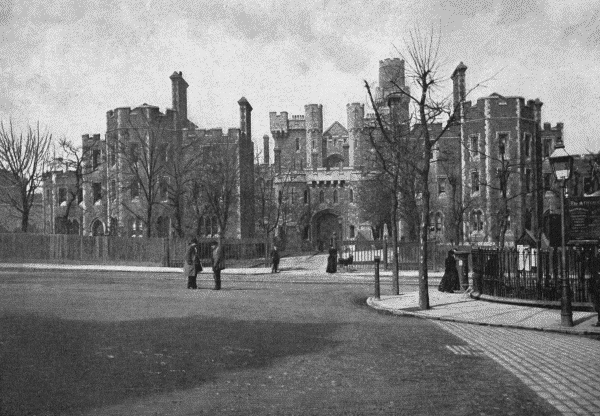
At nine minutes past nine in the morning on 13 July 1955, Ruth Ellis stepped from her cell into the execution chamber at HMP Holloway. The one-minute delay that cost her life came from a hoax call claiming reprieve—a cruel final twist in a case that had already captured the nation's conscience and sealed the fate of capital punishment in Britain.
Ellis, twenty-eight years old with bleached blonde hair and an unflinching gaze, had become something more than a convicted murderer. She was the last woman Britain would ever hang, and her death would help drive the final nails into the scaffold's coffin.
The Making of a Killer
Ruth Neilson was born in Rhyl, Wales, on 9 October 1926, the fifth of six children in a family that would prove as destructive as it was dysfunctional. Her father, Arthur Hornby—who later changed his surname to Neilson—was a cellist who played on Atlantic liners. But behind the respectable facade lay a predator.
Arthur's abuse began with Ruth's elder sister Muriel, continuing until the fourteen-year-old conceived his child. When Ruth turned eleven, her father's attention turned to her. The pattern of sexual abuse would continue for years, with their mother Bertha aware but too frightened to intervene. Muriel would kick Ruth out of the house when she sensed danger approaching, but the sisters never spoke openly of their shared trauma.
This was the crucible that forged Ruth Ellis—a woman who learned early that men took what they wanted, that violence was currency, and that survival meant accepting both.
By the late 1940s, Ellis had found her way into Soho's nightclub scene, working as a hostess at venues where the line between entertainment and prostitution blurred into insignificance. The Court Club in Duke Street became her stage, managed by Morris Conley, who blackmailed his employees into sleeping with him. Ellis, pregnant by one of her regular clients, married George Johnston Ellis—a violent, possessive alcoholic who refused to acknowledge paternity of their daughter Georgina.
David Blakely: The Last Dance Partner
In 1953, Ellis became manager of the Little Club in Knightsbridge, a position that brought her into contact with David Moffett Drummond Blakely. Three years her junior, Blakely was the archetypal public school boy—Shrewsbury and Sandhurst educated, a racing driver with a drinking problem and an engagement to Mary Dawson that seemed more social convenience than passion.
The relationship between Ellis and Blakely was combustible from the start. Within weeks he had moved into her flat above the club, despite his engagement. Ellis became pregnant again but had an abortion, feeling unable to match Blakely's level of commitment. The irony was bitter—here was a woman who had learned to survive by keeping men at a distance, undone by one she couldn't.
The violence escalated as both continued seeing other people. In January 1955, Ellis suffered a miscarriage after Blakely punched her in the stomach during an argument. She had also begun a relationship with Desmond Cussen, a former RAF pilot turned accountant, who provided stability that Blakely never could.
Easter Sunday, 1955
On Easter Sunday, 10 April 1955, the toxic triangle reached its inevitable conclusion. Ellis, suspecting Blakely was at Anthony and Carole Findlater's flat in Hampstead, took a taxi from Cussen's home to investigate. She arrived just as Blakely's car drove away.
Following on foot, Ellis walked the quarter-mile to The Magdala public house in South Hill Park, where she found Blakely's car parked outside. At around 9:30 pm, Blakely emerged with his friend Clive Gunnell.
What happened next unfolded with the mechanical precision of inevitability. Ellis stepped from the doorway of Henshaw's newsagent, drew a .38 calibre Smith & Wesson revolver from her handbag, and fired. The first shot missed. As Blakely ran around the car, she pursued him, firing a second shot that brought him down. Standing over his collapsed form, she fired three more bullets, one from less than half an inch away, leaving powder burns on his skin.
In apparent shock, Ellis tried repeatedly to fire the revolver's sixth shot before finally discharging it into the ground. The ricocheting bullet wounded bystander Gladys Yule, who lost the use of her right thumb—a detail that would prove crucial in the Home Secretary's decision.
Trial and Judgment
Ellis's trial at the Old Bailey was swift and devastating. Appearing on 20 June 1955 before Mr Justice Havers, she wore a black suit and white silk blouse, her blonde hair freshly bleached and coiffured. Her counsel, Aubrey Melford Stevenson, expressed concern about her striking appearance, but Ellis refused to alter it.
The prosecution, led by Christmas Humphreys, needed only one question: "When you fired the revolver at close range into the body of David Blakely, what did you intend to do?"
Ellis's reply was as precise as her gunfire: "It's obvious when I shot him I intended to kill him."
The jury took twenty minutes to convict. The mandatory death sentence followed with the mechanical certainty of the trap door.
The Secret of the Gun
While Ellis awaited execution at Holloway, a crucial piece of the puzzle emerged. On 12 July 1955, the day before her death, solicitor Victor Mishcon and his clerk Leon Simmons pressed Ellis for the full story. She revealed that Cussen had provided the gun and taught her to use it, even driving her to the murder scene.
Ellis asked Mishcon to promise not to use this information to secure a reprieve—he refused. The revelation reached the Home Office that night, but Home Secretary Gwilym Lloyd George concluded it only proved greater premeditation. The injury to the innocent bystander, he later said, was decisive: "We cannot have people shooting off firearms in the street!"
The End of the Dance
In a final letter to Blakely's parents, Ellis wrote: "I have always loved your son, and I shall die still loving him."
The hoax call on the morning of 13 July claimed to be from Lloyd George's private secretary with news of a stay of execution. Prison governor Charity Taylor spent six precious minutes calling the Home Office to confirm it was false. At 9:01 am—one minute late—Albert Pierrepoint ended Ruth Ellis's life.
The public reaction was immediate and intense. A petition for clemency had gathered 50,000 signatures. Columnist Cassandra of the Daily Mirror attacked the sentence: "The one thing that brings stature and dignity to mankind and raises us above the beasts will have been denied her—pity and the hope of ultimate redemption."
Novelist Raymond Chandler, living in Britain at the time, wrote scathingly to the Evening Standard about "the medieval savagery of the law." British Pathé's newsreel openly questioned whether capital punishment had any place in the 20th century.
The Legacy
Ellis was buried in an unmarked grave within Holloway's walls, as was customary. In the early 1970s, her remains were exhumed and reburied in St Mary's Church, Amersham, at her son Andy's direction. Her headstone reads simply: "Ruth Hornby 1926–1955."
The execution strengthened support for abolishing capital punishment. The last executions in the UK occurred in 1964, just nine years after Ellis's death. Between 1926 and 1955, 677 men and 60 women had been sentenced to death in Britain—but Ruth Ellis would be the last woman to face the hangman's noose.
Her case remains a study in how circumstances, choices, and society's failures can converge in tragedy. Ellis was shaped by childhood sexual abuse, economic desperation, and a society that offered women like her few alternatives to survival on its margins. Blakely paid with his life for his violence and callousness. An innocent bystander bore permanent injury.
But perhaps most significantly, Britain itself was changed. The death of Ruth Ellis—blonde, defiant, unrepentant to the end—proved to be the final argument against a punishment that had outlived its moral justification. In trying to demonstrate the state's ultimate authority, her execution instead revealed its ultimate cruelty.
The scaffold fell silent after Ruth Ellis, and it has remained so ever since.
Discussion (0)
Log in or register to join the discussion.
No comments yet. Be the first.