
At nine o'clock on the morning of 28 January 1953, Derek William Bentley walked to the gallows at Wandsworth Prison. The nineteen-year-old had the mental age of ten and could barely write his own name. He had been in police custody when his sixteen-year-old accomplice Christopher Craig shot and killed Police Constable Sidney Miles during a botched warehouse break-in. Yet it was Bentley, not Craig, who paid with his life.
The case would become Britain's most controversial execution—a judicial murder that galvanised public opinion against the death penalty and ultimately helped abolish capital punishment in the United Kingdom. It remains a stark reminder of how the law can fail its most vulnerable citizens.
The Boy Who Never Grew Up
Derek Bentley's life was marked by misfortune from birth. Born in Southwark on 30 June 1933, he was discovered to be the first of twins—his sibling was stillborn. His childhood was punctuated by trauma: surviving pneumonia as an infant, falling from a truck at age four and suffering what appeared to be an epileptic seizure, enduring the deaths of his sister, aunt, and grandmother during the Blitz.
The head injury from his childhood fall left lasting damage. Bentley suffered from severe headaches and petit mal seizures that caused him to lose track of time. His parents reported three grand mal seizures, including one where he nearly choked to death. When he entered secondary school after failing his eleven-plus examination, testing revealed the devastating extent of his intellectual disability.
At fifteen, Bentley's IQ was measured at 66, indicating a mental age of just ten years and four months. His reading age was that of a four-and-a-half-year-old—he was functionally illiterate. Prison medical officers would later describe him as 'borderline feeble-minded', unable to recognise or write all the letters of the alphabet.
In 1948, after being caught stealing, Bentley was sentenced to three years at Kingswood Approved School near Bristol. It was there he met Christopher Craig, a charismatic boy two years his junior who would later lead him to his death. Staff described Bentley as 'lazy, indifferent, voluble and of the "wise guy" type'—a vulnerable young man trying to project toughness he didn't possess.
The Night That Changed Everything
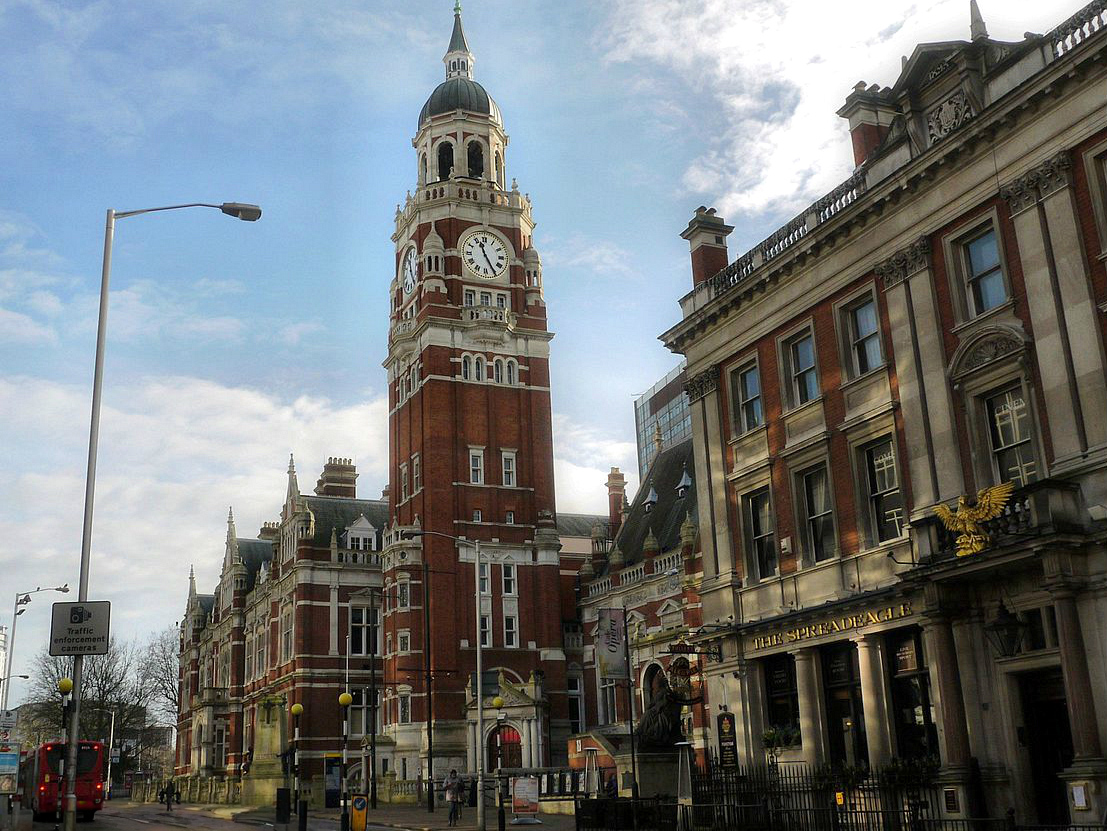
On the evening of 2 November 1952, Bentley and Craig decided to break into the Barlow & Parker confectionery warehouse in Croydon. Craig, despite being only sixteen, armed himself with a Colt revolver with a shortened barrel and modified ammunition. He gave Bentley a small knife and knuckleduster, though the older boy would never use them.
The break-in was amateur from the start. Neighbours spotted them climbing over the gate and up a drainpipe to the warehouse roof, immediately calling police. When officers arrived, the two boys hid behind the lift-housing, but they were trapped.
Detective Constable Frederick Fairfax climbed to the roof and grabbed Bentley, who broke free. What happened next would be debated for decades. Police witnesses claimed that when Fairfax ordered Craig to 'Hand over the gun, lad', Bentley shouted: 'Let him have it, Chris.'
Craig fired, striking Fairfax in the shoulder. The wounded officer managed to restrain Bentley again, who told him that Craig had more ammunition. As additional police arrived, Police Constable Sidney Miles reached the roof first—and was immediately shot through the head, killed instantly.
After exhausting his ammunition, Craig jumped thirty feet from the roof onto a greenhouse, fracturing his spine and left wrist. The sixteen-year-old would survive to serve ten years in prison. Bentley, who had been in police custody when Miles was shot, would face the gallows.
A Trial Built on Ambiguity
The trial at the Old Bailey in December 1952 was conducted before Lord Chief Justice Goddard, a hanging judge notorious for his harsh sentences. The prosecution was led by Christmas Humphreys, Senior Treasury Counsel, who built his case on the doctrine of 'joint enterprise'—that Bentley was equally responsible for the murder because he had participated in the armed robbery that led to it.
Three critical issues dominated the proceedings. First, the ballistics evidence was deeply flawed. Craig's sawn-off barrel made the gun wildly inaccurate—up to six feet at close range. A later forensic expert would cast doubt on whether Craig could have hit Miles deliberately. The fatal bullet was never found.
Second, the existence and meaning of Bentley's alleged words 'Let him have it, Chris' became the crux of the case. Craig and Bentley denied he had said them, while police officers testified he had. Even if the words were spoken, they were fatally ambiguous—they could mean 'shoot him' or 'give him the gun'. One officer who said Bentley hadn't spoken the words was ignored by the court.
Third, serious questions arose about Bentley's fitness to stand trial. His written statement to police was shown through forensic linguistics to have been largely edited by officers—the frequency and grammatical use of words like 'then' were inconsistent with Bentley's own speech patterns as evidenced in court.
Dr Denis Hill, a psychiatrist at Maudsley Hospital, examined Bentley and found him illiterate and of low intelligence. However, the prison medical officer deemed him sane and fit to plead. English law at the time did not recognise diminished responsibility due to intellectual disability—only complete criminal insanity was accepted as a defence.
When Bentley took the stand, his testimony was catastrophic. He denied obvious facts and appeared confused and contradictory. Craig's lawyer, John Parris, would later call him 'a lying moron'—though the lies seemed more the product of fear and incomprehension than malice.
A Verdict Written in Law
The jury took just 75 minutes to find both defendants guilty of murder, but they added a crucial recommendation for mercy for Bentley. Under the Children and Young Persons Act 1933, Craig could not be executed due to his age—he was sentenced to detention at Her Majesty's Pleasure. Bentley, nineteen and therefore legally an adult, faced the death penalty despite having neither fired the shot nor been free to do so.
Lord Goddard sentenced Bentley to hang, dismissing the jury's plea for mercy. When the inevitable appeal was heard on 13 January 1953, it too failed. Bentley's fate now lay in the hands of Home Secretary David Maxwell Fyfe, who would decide whether to recommend royal clemency.
The pressure for reprieve was immense. Over 200 Members of Parliament signed a memorandum calling for commutation. Public protests grew daily. Yet Maxwell Fyfe, later admitting he considered the fact that a police officer had been killed as a significant factor, refused to intervene. Parliament was given no opportunity to debate the case until after the execution.
The Final Hour
Albert Pierrepoint, Britain's chief executioner, arrived at Wandsworth Prison for what would become one of the most controversial hangings in British history. Outside the prison walls, protesters gathered, some arrested for property damage as they demonstrated against the impending execution of a mentally disabled teenager.
There is no record of Bentley's final meal or any last statement—perhaps a mercy, given his limited ability to comprehend what was happening to him. At 9 am precisely, the trap door opened. Derek Bentley was dead, executed for a crime he did not commit by a justice system that failed to protect its most vulnerable.
In March 1966, his remains were removed from the prison cemetery and reinterred in Croydon Cemetery, where a proper headstone finally marked the grave of the boy who became a symbol of judicial failure.
Justice, Delayed but Not Denied
The execution sparked immediate public unease that would never fully subside. Led initially by Bentley's parents William and Lilian, then after their deaths by his sister Iris, a forty-year campaign for justice began. The case became a cause célèbre, inspiring books, documentaries, and the film 'Let Him Have It'—the title taken from those disputed words that may have sealed his fate.
In 1993, forty years after his execution, Derek Bentley was granted a royal pardon. But this did not quash his conviction—it merely acknowledged that the punishment was wrong. His family, led by his niece Maria Bentley-Dingwall after Iris died of cancer in 1997, continued fighting for complete vindication.
On 30 July 1998, the Court of Appeal finally quashed Bentley's murder conviction. Lord Chief Justice Bingham ruled that Lord Goddard had misdirected the jury, failing to make clear that the prosecution must prove Bentley knew Craig was armed when they began the break-in. The judge had also failed to consider whether Bentley had withdrawn from their joint enterprise by the time Miles was shot.
Christopher Craig, by then 62 and long since released, issued a statement welcoming Bentley's vindication: 'His innocence has now been proved.' He apologised to the families of both PC Miles and Bentley, as well as to his own family, for his teenage actions that had cost so much.
The Legacy
Derek Bentley's case, alongside that of Timothy Evans—another mentally vulnerable man hanged for a crime he likely didn't commit—became pivotal in the campaign to abolish capital punishment. MP Sydney Silverman used the case to galvanise opposition to the death penalty, achieved in 1965 when hanging was finally ended in Britain.
The execution of Derek Bentley stands as one of Britain's most shameful judicial failures. A teenager with severe intellectual disabilities, manipulated by a younger but more streetwise accomplice, was hanged for a murder he neither committed nor could have prevented. His case exposes the fundamental flaws in applying absolute justice to complex human circumstances.
PC Sidney Miles, the victim, deserved better than to have his death avenged through the judicial murder of a vulnerable young man who posed no threat to anyone. Derek Bentley deserved better than to pay with his life for being born different, for being failed by every system meant to protect him.
The three words that may have sealed his fate—'Let him have it'—remain ambiguous to this day. But their meaning matters less than the greater truth: that a civilised society should never execute those too damaged to fully comprehend their actions. Derek Bentley's death changed Britain forever, ensuring that no other vulnerable person would follow him to the gallows. In that, perhaps, his tragedy found its only redemption.
Discussion (0)
Log in or register to join the discussion.
No comments yet. Be the first.