
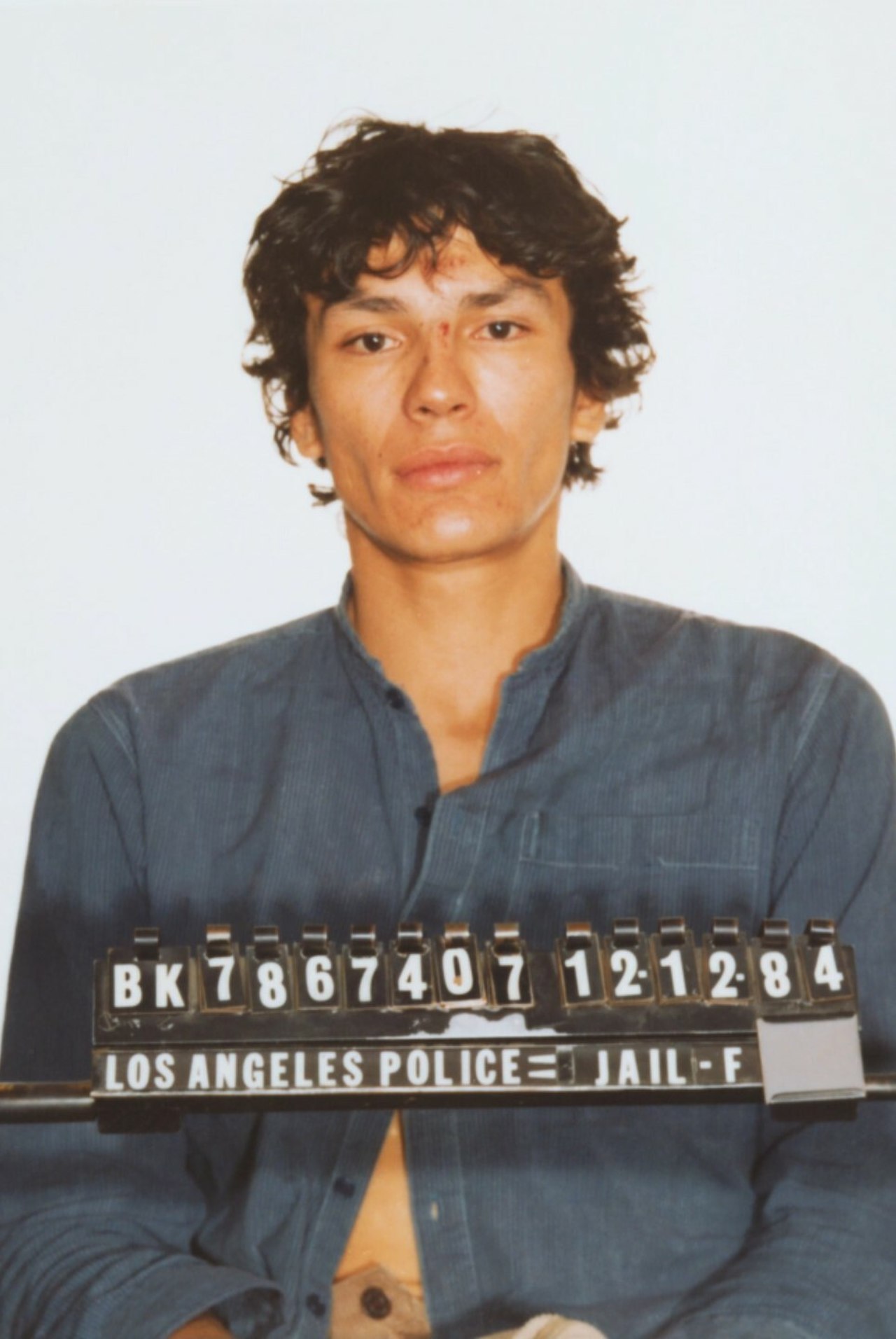
On the morning of June 7, 2013, in a hospital bed in Greenbrae, California, Richard Ramirez—the man who once terrorized Los Angeles and San Francisco as the Night Stalker—drew his last breath. He was 53 years old, his body consumed by B-cell lymphoma, his spirit as defiant and unrepentant as the day he was sentenced to die nearly a quarter-century earlier.
The death came not by the state's hand, as intended, but by cruel natural process. Cancer succeeded where California's death penalty had failed, claiming a life that courts had condemned but bureaucracy had preserved. For the families of his fifteen known victims—from nine-year-old Mei Leung, raped and murdered in a San Francisco basement, to elderly couples butchered in their beds—it was an ending both inevitable and insufficient.
Twenty-Four Years of Waiting
Ramirez had lingered on San Quentin's death row since his 1989 conviction, one of 741 condemned inmates in California's overcrowded execution chambers. His case had wound through the labyrinthine appeals process with glacial slowness, each legal maneuver another day of life purchased with taxpayer money, another day of anguish for those who survived his rampage.
The man who had once declared "Satan" his master and carved inverted crosses into his victims' flesh spent his final years in a 4-by-9-foot cell, his world reduced to concrete and steel. The swaggering killer who had terrorized Southern California for fourteen months in 1984 and 1985 became just another aging inmate, his rotting teeth—once a distinctive feature that helped identify him—replaced by prison dental work.
Prison records show a man who adapted to institutional life with disturbing ease. Ramirez married Doreen Lioy, a magazine editor, in 1996 at San Quentin. The ceremony took place in the prison's visiting room, a grotesque parody of romance that spoke to the twisted fascination some harbor for notorious killers. Lioy, who had corresponded with Ramirez for years and claimed to love him, eventually separated from him, though they never divorced.
The Killer's Legacy
During his imprisonment, Ramirez maintained the persona that had made him infamous. He showed no remorse for his crimes, offering no comfort to victims' families, no acknowledgment of the terror he had unleashed. When asked during his trial about his motivations, he had responded with characteristic callousness: "I don't feel guilty about anything." This stance never wavered.
His crimes had been particularly heinous, characterized by a judge as exhibiting "cruelty, callousness, and viciousness beyond any human understanding." Ramirez had used an arsenal of weapons—handguns, knives, machetes, tire irons, claw hammers—to murder at least fifteen people, rape eleven others, and terrorize countless more through burglaries and assaults. He had mutilated bodies, carved satanic symbols into flesh, and collected grotesque trophies, including the eyes of one victim, which he kept in a jewelry box.
The randomness of his attacks had been particularly terrifying. Unlike serial killers who targeted specific victim types, Ramirez struck across demographic lines: children and elderly, men and women, alone and in couples. The only constants were opportunity and cruelty.
A Troubled Genesis
The sources of Ramirez's evil traced back to a childhood marred by violence and neglect in El Paso, Texas. Born Ricardo Leyva Muñoz Ramirez in 1960, he endured brutal physical abuse from his father, suffered multiple head injuries that may have caused brain damage, and fell under the malignant influence of his older cousin Miguel, a Vietnam veteran who regaled the boy with stories of war crimes and showed him photographs of Vietnamese women he had raped and murdered.
At age 15, Ramirez witnessed Miguel shoot his own wife in the face during a domestic dispute. Rather than traumatizing him, the murder fascinated the teenager. He began smoking marijuana and using LSD, developed an interest in Satanism, and started committing burglaries. By 1982, at age 22, he had moved to California and begun using cocaine heavily, funding his addiction through increasingly violent crimes.
The Final Chapter
Ramirez's death brought no dramatic final words, no deathbed confessions, no appeals for forgiveness. Prison officials reported that he died quietly in the early morning hours, succumbing to complications from the lymphoma that had been diagnosed in 2009. Unlike the state executions he had evaded, there were no last meal requests, no final statements, no witnesses to mark the moment when one of California's most notorious killers slipped into oblivion.
The death certificate listed the time as 9:10 a.m., cause of death as complications from B-cell lymphoma. What it could not capture was the decades of suffering his victims' families had endured, the fear his name still evoked, or the questions that would forever remain unanswered about the nature of evil itself.
For the families of his victims—Maria Hernandez, who survived being shot in the face; the children of Vincent and Maxine Zazzara, found butchered in their Whittier home; the relatives of Bill Doi, shot while trying to protect his disabled wife—Ramirez's death offered a form of closure, though not the justice they had sought. The state had failed to execute its judgment, but time and disease had rendered their own verdict.
In death, as in life, Richard Ramirez remained what he had always been: a reminder that some forms of human wickedness defy explanation or redemption. He had lived without remorse and died the same way, leaving behind only the memory of terror and the hollow satisfaction that his victims had, at last, outlived their tormentor.
Discussion (0)
Log in or register to join the discussion.
No comments yet. Be the first.