
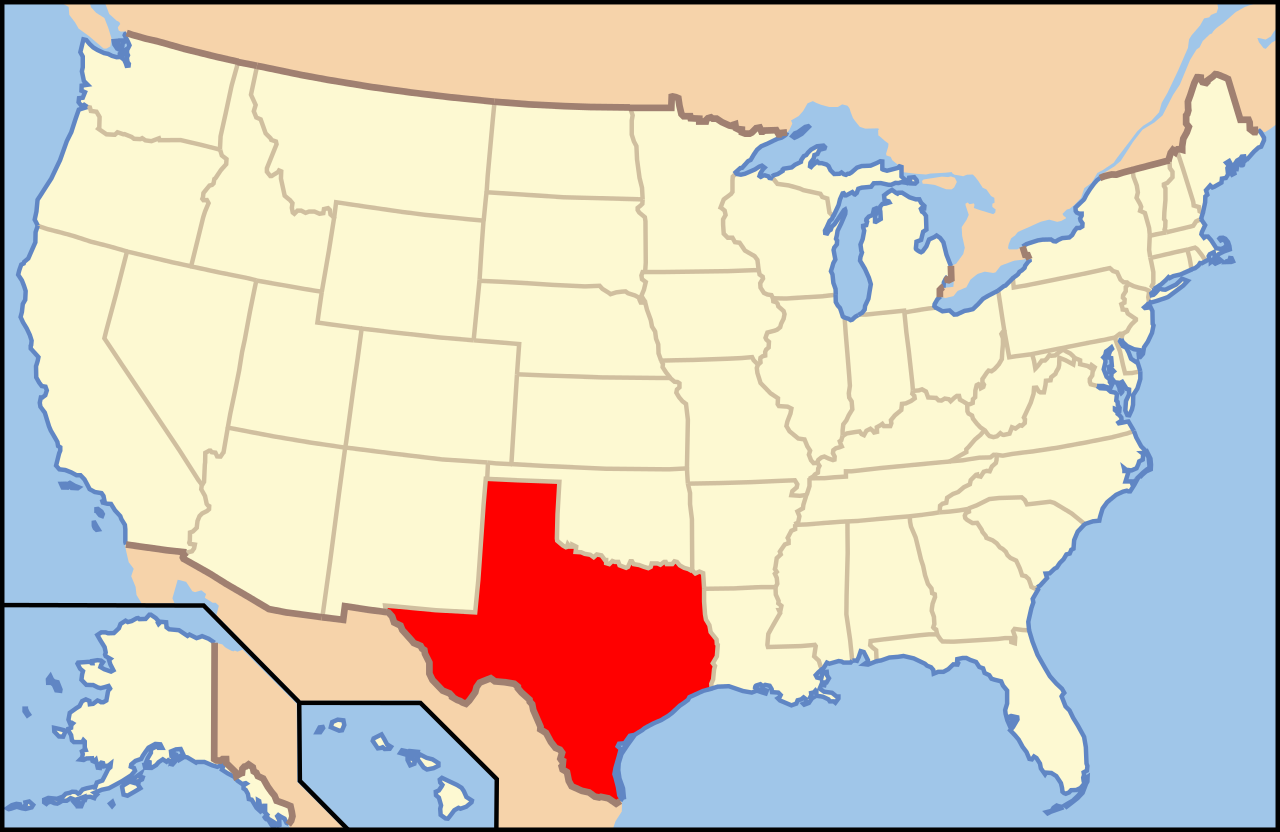
At 6:45 p.m. on February 3, 1998, Karla Faye Tucker became a footnote to history: the first woman executed in Texas since the Civil War, and only the second woman put to death in America since capital punishment was reinstated in 1976. But her legacy transcends these grim statistics. In her final moments, as lethal chemicals coursed through her veins, Tucker praised Jesus Christ, licked her lips, gazed at the ceiling, and hummed—a death that encapsulated one of the most controversial clemency cases in modern American jurisprudence.
Tucker's journey to the death chamber began in the early morning hours of June 13, 1983, in a cramped Houston apartment where two people would die by her hand. Jerry Dean was restoring a motorcycle there; Deborah Ruth Thornton had fled an argument with her husband and ended up spending the night in Dean's bed. Neither would see another sunrise.
A Night of Horror
The murders were as brutal as they were senseless. Tucker, then 23, had spent the weekend using drugs with her boyfriend Daniel Ryan Garrett and his friends. Around 3 a.m., high on a cocktail of metamphetamines and alcohol, they entered Dean's apartment with the intention of stealing his motorcycle. What began as a burglary devolved into carnage.
When Dean tried to protect himself, grabbing Tucker above the elbows, Garrett intervened with savage efficiency, striking Dean repeatedly in the back of the head with a ball-peen hammer. As Dean began making what Tucker later described as a "gurgling" sound, she picked up a three-foot pickaxe leaning against the wall. "I wanted to stop him from making that noise," she would later testify, delivering blow after blow until Garrett returned to finish Dean with a strike to the chest.
The discovery of Thornton cowering under bedsheets triggered a second wave of violence. Tucker struck the woman with the pickaxe, and when Thornton tried to struggle free, Tucker "embedded the axe in her heart." In perhaps the most chilling detail to emerge from the trial, Tucker would later claim she experienced multiple intense orgasms with each blow of the pickaxe—a statement that would haunt her clemency appeals years later.
The Reckoning
The crime scene that greeted investigators was devastating. Two lives destroyed for the theft of motorcycle parts. Tucker and Garrett were arrested five weeks later, indicted in September 1983, and tried separately. Though both faced capital murder charges, the prosecution focused on Tucker's role in both deaths while Garrett was not charged with Thornton's murder.
Tucker entered a plea of not guilty and was held awaiting trial. It was in her jail cell that the first transformation began. Soon after her imprisonment, Tucker took a Bible from the prison ministry program. "I didn't know what I was reading," she later recalled. "Before I knew it, I was in the middle of my cell floor on my knees. I was just asking God to forgive me."
In October 1983, Tucker became a born-again Christian. The conversion appeared genuine to those who observed her over the following years, but it would not save her from conviction. In late 1984, both Tucker and Garrett were sentenced to death—an unusual outcome for a female defendant, as the death penalty was rarely sought for women.
Fourteen Years of Waiting
Tucker was assigned prisoner number 777 at the Mountain View Unit in Gatesville, Texas, where she would spend fourteen years on death row. Her cellmate was Pam Perillo, whose own sentence would eventually be commuted. During this time, Tucker's transformation continued. She married her prison minister, Reverend Dana Lane Brown, by proxy in 1995, holding her Christian wedding ceremony inside the prison.
Prison officials testified that Tucker was a model prisoner. The warden of Texas' Huntsville prison would later state that after fourteen years on death row, she likely had been reformed. But the machinery of justice ground on. Between 1984 and 1992, requests for retrial and appeals were denied.
In June 1992, Tucker made her final plea, requesting that her life be spared on the basis that she was under the influence of drugs at the time of the murders. She argued that she was now a reformed person, and that had she not taken drugs, the murders would never have been committed.
An Unlikely Coalition
Tucker's clemency appeal drew extraordinary support from across the political and religious spectrum. Among those who petitioned Texas on her behalf were Bacre Waly Ndiaye, the United Nations commissioner on summary and arbitrary executions; the World Council of Churches; Pope John Paul II; Italian Prime Minister Romano Prodi; House Speaker Newt Gingrich; and televangelist Pat Robertson.
Perhaps most remarkably, Ronald Carlson—the brother of victim Deborah Thornton—also supported commuting Tucker's sentence. Carlson had initially supported her execution but underwent his own religious conversion and decided he was now opposed to all executions.
The board rejected her appeal on January 28, 1998. Hours before the execution, Governor George W. Bush refused the final eleventh-hour appeal to block her execution. In Texas, the governor could only approve the recommendation of the parole board, and such recommendations were rarely given.
The Final Hours
On February 3, 1998, state authorities transported Tucker from Gatesville to the Huntsville Unit in a Texas Department of Criminal Justice aircraft. For her last meal, she requested a banana, a peach, and a garden salad with ranch dressing—a modest final repast that seemed to reflect the simplicity her conversion had brought to her life.
Tucker selected four people to watch her die: her sister Kari Weeks, her husband Dana Brown, close friend Jackie Oncken, and Ronald Carlson, the brother of one of her victims. The witnesses for the murder victims included Thornton's husband Richard, Thornton's only child William Joseph Davis, and Thornton's stepdaughter Katie.
Her final words, delivered with what witnesses described as remarkable composure, were a mixture of apology, love, and faith:
"Yes, sir, I would like to say to all of you — the Thornton family and Jerry Dean's family — that I am so sorry. I hope God will give you peace with this. Baby, I love you. Ron, give Peggy a hug for me. Everybody has been so good to me. I love all of you very much. I am going to be face to face with Jesus now. Warden Baggett, thank all of you so much. You have been so good to me. I love all of you very much. I will see you all when you get there. I will wait for you."
As the lethal chemicals were administered, Tucker praised Jesus Christ, licked her lips, looked at the ceiling, and hummed. She was pronounced dead at 6:45 p.m. CST, eight minutes after receiving the injection.
Aftermath and Legacy
Tucker's execution sent shockwaves through the criminal justice system that extended far beyond Texas. One of the most profound impacts was on Fred Allen, the captain of the "Death House Team" who had managed over 120 executions. Within days of Tucker's execution, Allen suffered an emotional breakdown. He resigned his job, forfeiting his pension, and completely reversed his position on capital punishment.
"I was pro capital punishment," Allen later told filmmaker Werner Herzog. "After Karla Faye and after all this, until this day, eleven years later, no sir. Nobody has the right to take another life. I don't care if it's the law. And it's so easy to change the law."
The case also generated controversy beyond the execution chamber. Conservative commentator Tucker Carlson later questioned Governor Bush about the clemency decision, alleging that Bush had mockingly mimicked Tucker's televised pleas for mercy, speaking in a high-pitched voice and smirking when recounting her words.
Tucker was buried at Forest Park Lawndale Cemetery in Houston. Her story has inspired numerous books, documentaries, songs, and theatrical productions, cementing her place as one of the most controversial figures in the modern death penalty debate.
The Victims Remembered
Lost in the media spectacle surrounding Tucker's conversion and execution were the lives of Jerry Dean and Deborah Ruth Thornton. Dean, 27, was a motorcycle enthusiast who was working to restore his bike in his apartment. Thornton, 32, was a mother who had argued with her husband and sought temporary refuge at a friend's place, making a fatal decision that cost her life.
The brutality of their deaths—particularly the sexual gratification Tucker claimed to have experienced during the killings—serves as a stark reminder of the horror that preceded her transformation. That Tucker's genuine repentance could coexist with the unforgivable nature of her crimes remains the central paradox of her case.
Whether Tucker's fourteen-year journey from drug-addled killer to devout Christian represented genuine redemption or sophisticated manipulation remains a matter of individual belief. What cannot be disputed is that her execution marked a watershed moment in American capital punishment, raising fundamental questions about mercy, justice, and the possibility of human transformation that continue to resonate today.
Discussion (0)
Log in or register to join the discussion.
No comments yet. Be the first.