On the night of December 20, 1968, David Arthur Faraday and Betty Lou Jensen drove to a quiet lover's lane on Lake Herman Road, just outside Benicia. They were seventeen and sixteen years old, high school sweethearts seeking privacy in the California darkness. Between 11:05 and 11:10 PM, their world ended in a matter of minutes.
The killer approached methodically. Police determined he parked ten feet from their car, fired warning shots to terrify them, then executed his plan with cold precision. As the teenagers scrambled to escape through the passenger door, he shot Faraday in the head with a .22-caliber pistol. Jensen managed to flee, but he hunted her down, firing six shots into her back. Only one missed.
This was the beginning. The man who would soon call himself the Zodiac had announced himself to the Bay Area with calculated brutality.
The Pattern Emerges
Over the next ten months, the killer struck three more times with methodical variation. On July 4, 1969, Darlene Ferrin and Michael Mageau were shot at Blue Rock Springs Park in Vallejo—another lovers' lane, just two miles from the first attack. This time, he used a 9mm pistol and spoke to no one. Ferrin died; Mageau survived.
At Lake Berryessa on September 27, 1969, the killer appeared in an executioner's hood, armed with a knife. He bound Bryan Hartnell and Cecelia Shepard, then stabbed them repeatedly. Hartnell lived; Shepard died two days later. The attack marked a dramatic escalation in ritual and personal involvement.
The final confirmed murder broke the pattern entirely. On October 11, 1969, cab driver Paul Stine was shot point-blank in his taxi in San Francisco's Presidio Heights. Urban, professional victim, single gunshot—the Zodiac had demonstrated his range.
But it was what happened after the killings that transformed a series of murders into an enduring cultural obsession.
The Voice in the Letters
Beginning July 31, 1969, three Bay Area newspapers received identical letters, each containing one-third of a cryptogram. The writer demanded publication, threatening more deaths if ignored:
"I am the killer of the 2 teenagers last Christmass at Lake Herman... If you do not print this cypher by the afternoon of Fry. 1st of Aug 69, I will go on a kill ram-Page Fry. night."
The cryptogram, designated Z408, was cracked within days by amateur codebreakers Donald and Bettye Harden. It read: "I like killing people because it is so much fun... I am collecting slaves for my afterlife."
On August 4, 1969, came the letter that gave him his name: "This is The Zodiac speaking." From then until 1974, he sent over twenty confirmed letters to newspapers, police, and prominent figures, each signed with his distinctive crosshair symbol. Four contained cryptograms; two remain unsolved.
The correspondence revealed a killer obsessed with control, media attention, and intellectual games. He included pieces of Paul Stine's bloodstained shirt as proof of his crimes, provided bomb diagrams, and claimed thirty-seven victims total. The letters displayed knowledge of crime scenes known only to police, yet were riddled with deliberate misspellings and theatrical flourishes.
The Gaps That Haunt
For all the physical evidence—bullets, fingerprints, handwriting samples, witness descriptions—the Zodiac remains a phantom. The investigation has consumed thousands of hours and millions of dollars, yet fundamental questions persist.
The witness descriptions vary significantly. Michael Mageau described a heavyset white man, 5'8", 195-200 pounds, with curly light brown hair. But at Lake Berryessa, the hooded figure's build and movements suggested someone different. San Francisco police officers Don Fouke and Eric Zelms observed a man near the Stine murder scene—white male, mid-twenties to early forties, stocky build—but their descriptions don't perfectly align with other witnesses.
The forensic evidence presents similar contradictions. Partial fingerprints from Stine's cab don't match any suspect conclusively. DNA samples extracted in recent years remain too degraded or contaminated for definitive identification. Handwriting analysis of the letters shows consistency, but experts debate whether the writer deliberately disguised his natural hand.
Most puzzling is the killer's sudden disappearance. After the flurry of letters through 1971, communication dwindled. The final confirmed Zodiac letter arrived January 29, 1974—a rambling note referencing "The Exorcist" and claiming thirty-seven victims. Then, silence.
The Usual Suspects
Arthur Leigh Allen remains the only suspect ever publicly named by police. A former elementary school teacher and convicted child molester, Allen possessed disturbing parallels to the case. Friends claimed he called himself "The Zodiac" before the killer adopted the name, spoke of hunting couples at lovers' lanes, and discussed writing a book about a serial killer named Zodiac. The timing of his imprisonment aligned perfectly with gaps in the Zodiac's correspondence.
Yet Allen never matched definitively. DNA analysis in the early 2000s couldn't link him to crime scene evidence. Handwriting didn't match. He died in 1992, taking any confession to the grave.
Gary Francis Poste emerged as a suspect in 2021 when the "Case Breakers"—a group of former law enforcement officials and investigators—claimed to have identified him. Poste, who died in 2018, allegedly confessed to being the Zodiac in a 2017 interview. The team pointed to circumstantial evidence: forehead scars supposedly matching witness descriptions, the same shoe size as footprints found at crime scenes, and connections to alleged victim locations.
Critics dismantled these claims methodically. Tom Voigt, who runs the Zodiackiller.com website, noted that no witnesses described forehead scars. The FBI declined to validate the Case Breakers' findings, stating the case remained open with "no new information to report."
Richard Gaikowski, a counterculture journalist working in the Bay Area during the murders, attracted attention for his resemblance to composite sketches and proximity to crime scenes. Paul Doerr, a fanzine publisher and right-wing militant, was proposed in Jarrett Kobek's 2022 book "How to Find Zodiac" based on his cryptography interests and writings that paralleled Zodiac letters. Earl Van Best Jr. was championed by his biological son Gary Stewart, though subsequent investigation revealed manipulated evidence and alibis placing Van Best in Europe during the murders.
Each theory crumbles under scrutiny, yet each contains fragments that feel tantalizingly close to truth.
The Cryptographic Obsession
The Zodiac's ciphers represent perhaps the most analyzed puzzle in criminal history. The Z408 cipher, cracked in 1969, revealed the killer's stated motivation and desire for postmortem slaves. In December 2020, after fifty-one years, an international team of codebreakers finally solved the Z340:
"I hope you are having lots of fun in trying to catch me... I am not afraid of the gas chamber because it will send me to paradice all the sooner because I now have enough slaves to work for me."
The Z13 and Z32 ciphers remain unsolved, spawning countless theories. French-Moroccan engineer Fayçal Ziraoui claimed in 2021 that Z13 reads "Kayr" (supposedly a typo of "Kaye," pointing to suspect Lawrence Kane) and Z32 provides coordinates for a school bomb location. Anonymous law enforcement sources dismissed these solutions.
The ciphers embody the Zodiac's central paradox: genuine intelligence corrupted by homicidal narcissism. They demonstrate mathematical sophistication yet serve no purpose beyond taunting authorities and feeding his ego.
The Media Monster
The Zodiac understood media manipulation decades before social media made it commonplace. He demanded front-page coverage, threatened escalation if ignored, and provided exclusive details to maintain press attention. The letters grew increasingly theatrical—Halloween cards, bomb diagrams, punch cards with holes spelling death threats.
This hunger for publicity may explain his disappearance. As public interest waned and police response became routine, the game lost its thrill. Or perhaps he simply died, was imprisoned for other crimes, or achieved the recognition he craved and moved on.
The case has spawned an entire industry of amateur investigators, true crime enthusiasts, and conspiracy theorists. Website forums dissect every letter, photograph, and witness statement with religious devotion. The Zodiac has become a collaborative obsession, each new theory building on decades of accumulated speculation.
The Question of Additional Victims
The Zodiac claimed thirty-seven murders, yet investigators confirm only five deaths. This discrepancy haunts the case. Did he exaggerate to enhance his reputation? Did he kill elsewhere and escape detection? Or do dozens of unsolved murders from the era contain his hidden signature?
Potential connections include Cheri Jo Bates, murdered in Riverside in 1966, and various disappearances around Lake Tahoe. None have been definitively linked, leaving the true scope of his crimes unknowable.
What Remains Unknown
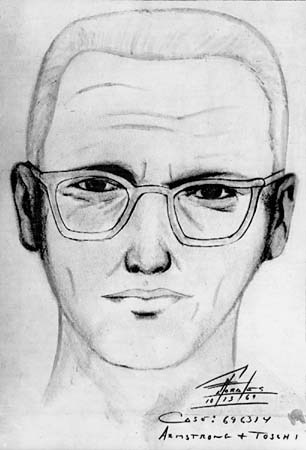
Fifty-five years later, the Zodiac Killer case exemplifies how modern investigative techniques can illuminate details while leaving essential questions unanswered. We know the ballistics, the crime scene layouts, the precise wording of letters. We have composite sketches, witness testimonies, and forensic evidence. Yet we cannot name the killer.
The case remains officially open with multiple agencies: the FBI, San Francisco Police Department, and various county sheriff's offices continue investigating, though resources have diminished. DNA technology offers hope, but the degraded evidence may never yield conclusive results.
Perhaps the Zodiac's greatest achievement wasn't his five confirmed murders, but his transformation from serial killer into cultural phenomenon. He created a puzzle designed to be perpetually unsolved—cryptograms within cryptograms, clues that lead nowhere, a case that generates more questions than answers.
The teenagers who died at Lake Herman Road, the young woman who bled out at Queen of the Valley Hospital, the cab driver who picked up the wrong fare in Presidio Heights—they deserve resolution. Their families deserve answers. But the man who called himself Zodiac may have engineered the perfect crime: not just murder, but eternal mystery.
Somewhere in the vast accumulation of evidence, theories, and obsessive analysis lies the truth. Five people are dead, two survived, and one killer vanished into the California night, leaving behind only crosshairs and questions that may outlast us all.
Log in or register to join the discussion.
No comments yet. Be the first.
Log in or register to post your theory.
No theories posted yet.