
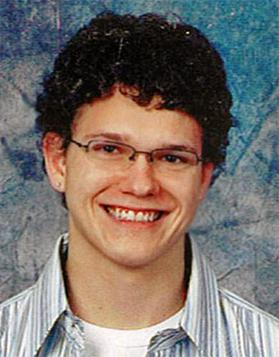
At 2:30 a.m. on May 14, 2008, a phone line went silent in southwestern Minnesota. On one end, Brian and Annette Swanson sat in their pickup truck, listening to dead air. On the other end, their 19-year-old son Brandon had just exclaimed "Oh, shit!" before vanishing from the world entirely. Nearly seventeen years later, not a trace of him has been found.
The night began ordinarily enough. Brandon Swanson, a student at Minnesota West Community and Technical College, had been celebrating the end of spring semester with friends in Canby. He'd attended two parties, drinking alcohol but not enough to appear visibly intoxicated, according to witnesses. Just before midnight, he set out for the 30-mile drive home to Marshall, a route he'd traveled countless times.
The Call That Changed Everything
Around 2 a.m., Brandon's Chevrolet Lumina slid off the road into a ditch. Uninjured, he called his parents for help. What followed was a 47-minute conversation that would become one of the most scrutinized phone calls in missing person history.
Brandon told his parents he believed he was near Lynd, roughly seven miles southwest of Marshall. He could see lights that reinforced this belief. Brian and Annette drove out to find him, staying on the phone throughout. Both father and son tried signaling each other with their headlights—Brandon from his stuck car, his parents from their truck. Neither saw the other's signals.
Growing frustrated, Brandon decided to abandon his vehicle and walk toward the lights he could see. He told his father to meet him at a bar parking lot in Lynd. Brian began driving there, maintaining conversation with his son. Then, 47 minutes into the call, Brandon's voice cut through the phone: "Oh, shit!"
Silence.
His parents tried calling back repeatedly. No answer. Brandon Swanson had vanished.
The Investigation Begins
When the Swansons contacted Lynd police at 6:30 a.m., they received a response that would later fuel their campaign for legal reform. Officers told them it was "hardly unusual" for young men to stay out all night after college classes ended. One officer specifically said Brandon had a "right to be missing."
By later that morning, however, the situation had shifted dramatically. When police finally obtained Brandon's cell phone records, they revealed a stunning discrepancy: Brandon hadn't been calling from near Lynd at all. His phone had pinged towers near Porter, 25 miles away in a completely different direction.
Deputies searched the Porter area and found Brandon's abandoned Chevrolet Lumina in a ditch along a gravel road, one mile north of State Highway 68. The car was hung up on an incline, wheels off the ground on one side—stuck but undamaged. The doors were open, keys missing. The surrounding grass and gravel yielded no tracks to indicate which direction Brandon might have walked.
The Search Intensifies
What began as a local search quickly expanded across multiple counties. Aerial teams, search dogs, and ground crews scoured 122 square miles over several years. The most significant breakthrough came from bloodhounds brought in from South Dakota.
The dogs picked up a three-mile scent trail leading west-northwest from Brandon's car to an abandoned farm, then along the Yellow Medicine River to a point where the trail appeared to enter the water. This discovery seemed to support the most prevalent theory: that Brandon had accidentally fallen into the river and drowned.
Brandon had mentioned passing fences and hearing water during his phone call—details that aligned with the landscape near where his car was found. On the morning of his disappearance, parts of Lincoln County had water levels of 10 feet deep, though they had receded since then.
Despite extensive searches of the river using boats, divers, and drainage gates, no body was ever recovered.
The Gaps in Understanding
The case is riddled with perplexing questions that investigators have never been able to answer satisfactorily.
First, there's the matter of Brandon's location confusion. It remains unknown whether he was aware that he was 25 miles from where he believed himself to be. He had driven the route between Canby and Marshall many times. How did an experienced local driver become so disoriented on familiar roads?
Second, what did Brandon see that made him believe he was near Lynd? Sheriff Joel Dahl noted that from the area where Brandon's car was found, a red light atop a grain elevator in Taunton was visible. Could this single light have misled Brandon into thinking he saw the lights of Lynd? The theory seems plausible but remains unproven.
Most crucially, what happened in the moment Brandon exclaimed "Oh, shit!" and fell silent? The timing of this exclamation coincides roughly with when he would have been walking toward the Yellow Medicine River, based on the bloodhound trail. But the dogs' trail continued beyond the water—across the river and along the opposite bank before ending at another gravel road.
Competing Theories
The official investigation has focused primarily on accidental drowning, but several theories have emerged to explain Brandon's disappearance.
Accidental Drowning: The most commonly accepted theory suggests Brandon fell into the Yellow Medicine River while attempting to cross it or walking along its banks. The river was swollen from spring runoff, with water levels up to 10 feet deep in some areas. However, extensive searches of the water yielded no body or evidence.
Misadventure in Rural Terrain: Some investigators believe Brandon may have fallen into a culvert, abandoned well, or other rural hazard while walking in darkness across unfamiliar farmland. The area's agricultural landscape contains numerous potential dangers invisible at night.
Foul Play: Sheriff Jack Vizecky acknowledged he couldn't rule out foul play, though no evidence supported it. "Someone could have been in the shadows, and they got him that way," he speculated. The open car doors and missing keys have fueled some speculation about an encounter with another person.
Intentional Disappearance: The possibility that Brandon chose to disappear has been considered but is dismissed by family members who knew him well. His parents maintain this would have been entirely out of character.
A Mother's Doubt
Despite the bloodhound trail leading to the river, Brandon's mother, Annette Swanson, remains unconvinced that her son drowned. She points to a crucial detail: the scent trail didn't end at the water.
"There really is nothing to indicate that he's in the river," she told CNN. The bloodhounds followed the scent across the water and continued along the opposite riverbank before the trail ended at another gravel road, leading north toward the Yellow Medicine County line.
Annette also notes that despite any alcohol Brandon consumed earlier that evening, he didn't sound disoriented or confused during their lengthy phone conversation. His father Brian concurs, remembering their son as coherent and focused on getting home.
Brandon's Law: A Legacy of Change
The Swansons' frustration with the initial police response—being told their adult son had a "right to be missing"—sparked a successful campaign for legislative reform. Working with state Representative Marty Seifert, they developed "Brandon's Law," which requires Minnesota law enforcement to immediately investigate reports of missing adults, rather than waiting to see if the person returns.
The law, signed by Governor Tim Pawlenty in 2009, mandates that police determine whether a missing person is in dangerous circumstances and notify other agencies promptly. It also clarifies jurisdictional responsibilities and prohibits officers from refusing reports based on assumptions about voluntary disappearance.
Four other states have since passed similar legislation. For the Swansons, the law represents hope that other families won't face the same initial dismissal they encountered.
The Unanswered Questions
Nearly two decades later, Brandon Swanson's disappearance remains as mystifying as ever. The bloodhound trail suggests he made it to the river but continued beyond it. The missing keys and open car doors hint at possibilities investigators never fully explored. His final words—"Oh, shit!"—capture a moment of sudden alarm that no one can definitively explain.
Search efforts continued sporadically for years, with teams returning each spring after snowmelt but before planting season. By 2015, 90 tips had been reported through an official tip line, but none led to Brandon's discovery.
The case raises uncomfortable questions about rural safety, communication technology limitations, and the challenges of searching vast agricultural landscapes. It also highlights how quickly someone can vanish completely, even while maintaining phone contact with loved ones.
What happened to Brandon Swanson in those final moments remains unknown. Whether he fell victim to the swollen river, encountered some other rural hazard, or faced circumstances yet unconsidered, his fate continues to elude investigators, his family, and the public who have followed his case for nearly two decades.
The porch light at the Swanson home burned all night, every night, for at least five years after Brandon's disappearance—a beacon of hope that he might somehow find his way home through the darkness that claimed him.
Log in or register to join the discussion.
No comments yet. Be the first.
Log in or register to post your theory.
No theories posted yet.